Lifting
Hoehyeon-dong Dermatology Clinic: Can Lifting Treatments Produce Different Results?
Hello.
I’m Lee Kang-in, director of Kind Global Clinic, and I take the time to listen carefully to each patient’s story.
Considering a Lifting Treatment at a Hoehyeon-dong Dermatology Clinic
What if you’ve traveled a long way and the results aren’t what you expected...
Why am I not seeing results?
Many people feel that their appearance hasn’t changed as much as they had hoped, even after investing time and money in a lifting treatment.
Some are happy that their facial contours look more defined,
while others feel disappointed with the treatment because their cheeks appear hollow.
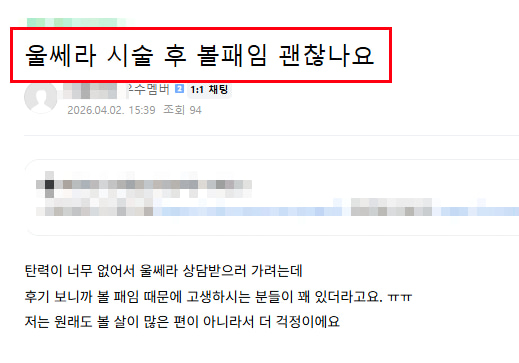
Why does satisfaction vary so much even when the same device and number of shots are used?
These differences are difficult to explain simply in terms of whether a treatment result is good or bad.
The plan made at the outset can influence the outcome.
Today, we’ll look at why results can vary even when people receive the same type of treatment at a Hoehyeon-dong dermatology clinic.
<Contents>
1. Is there one right answer for skin treatments?
2. Do different devices target different areas?
3. What is 1:1 custom lifting omakase?
1. Is there one right answer for skin treatments?
It depends on your skin’s characteristics
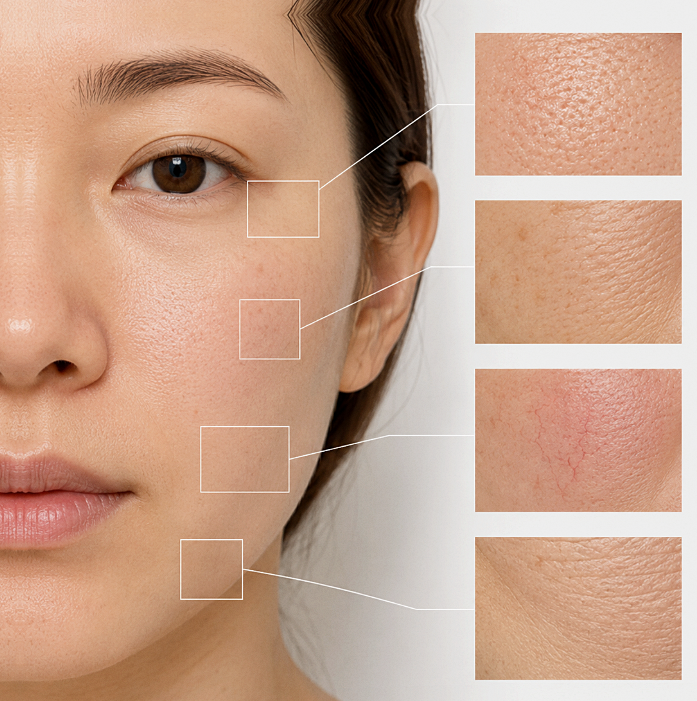
Lifting treatments generally work according to the following principles.
1) Heat energy is delivered to the deeper layers of the face to stimulate the tissue.
2) The body then goes through a process of repairing the stimulated tissue.
3) During this process, components associated with skin elasticity, such as collagen and elastin, are produced.
This regenerative process itself does not differ from person to person.
However, the foundation that receives the energy—in other words, the condition of the skin—varies considerably between individuals.
Some people have thicker skin and more fat, while others have thinner skin.
The depth at which sagging has developed and the way facial muscles are used also vary from person to person.
What happens if energy is delivered with the same intensity and direction despite these differences in skin?
If the stimulation exceeds what the skin can tolerate, unwanted reactions such as hollowing of the cheeks may occur.
Conversely, if the stimulation is insufficient, it may be difficult to notice a change.
Treatment that follows device settings without considering the characteristics of your individual skin
This kind of mechanical approach without a tailored plan is a major reason for unsatisfactory results.
2. Do different devices target different areas?
Device selection requires clear criteria
There are several types of lifting devices, and each acts on different layers of the skin and delivers energy in a different way.
Therefore, the device should be selected based on whether your main concern is sagging, loss of elasticity, or excess fat.
The ways these devices work can be broadly divided into three categories.
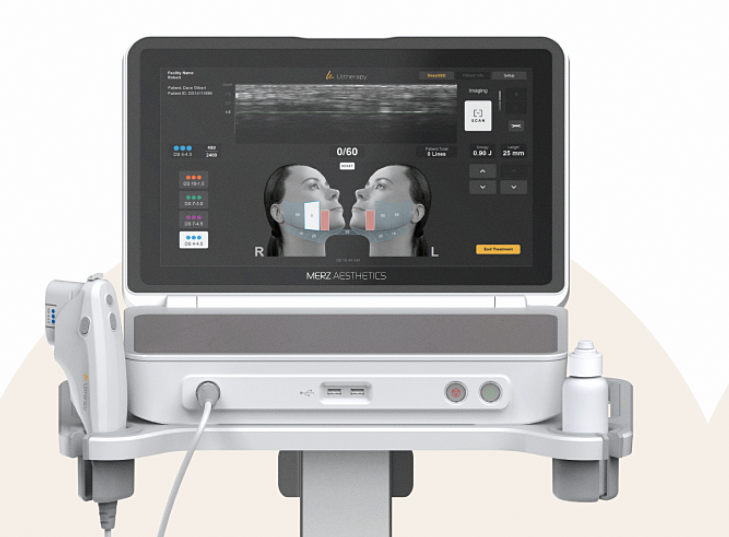
First, ultrasound-based lifting treatments such as Ultherapy and Shurink
create thermal coagulation points in the SMAS layer, which lies deeper than the surface of the face.
By tightening the underlying support structure, these treatments may be considered for sagging or to improve the definition of the jawline.
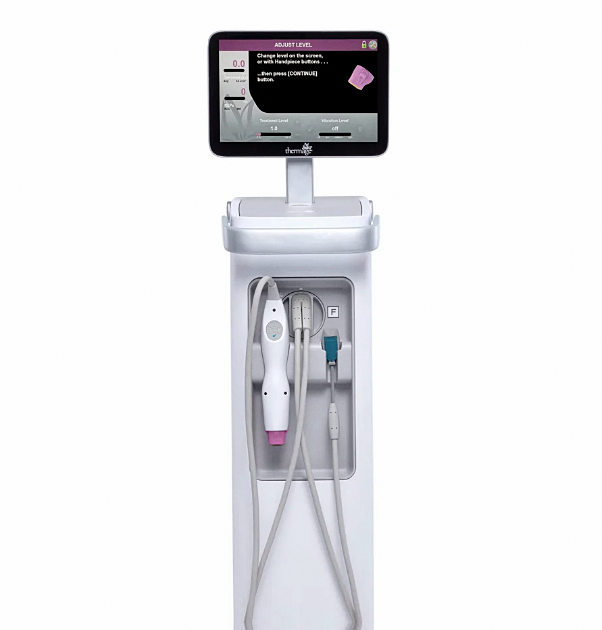
Radiofrequency devices such as Thermage and InMode
deliver heat to the dermis, a shallower layer than the one targeted by ultrasound.
By reorganizing collagen and addressing skin texture and elasticity, these treatments may also help improve fine lines.
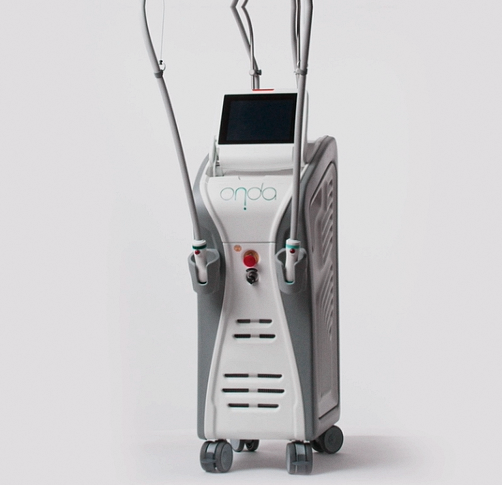
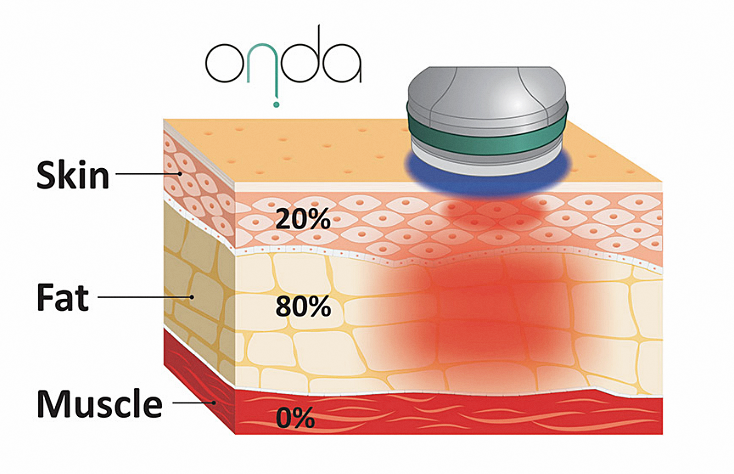
There are also treatments that target the fat layer, such as Onda lifting.
They use microwave energy to selectively stimulate fat cells.
They can address excess fat, such as under the chin or around the jowls, while also taking skin tightening into consideration.
As you can see, each device delivers energy to a different depth and works in a different way.
So simply comparing which lifting treatment is better isn’t enough.
What matters is identifying which layer of your face needs attention first and deciding the order in which to address your concerns.
Even when the same device is used, a different treatment plan can lead to a different outcome.
3. What is 1:1 custom lifting omakase?
It’s important to assess each area that needs attention
As discussed above, each device acts on a different layer of the skin.
Therefore, rather than relying on just one device,
you can consider using two or more devices to address different concerns and complement one another.
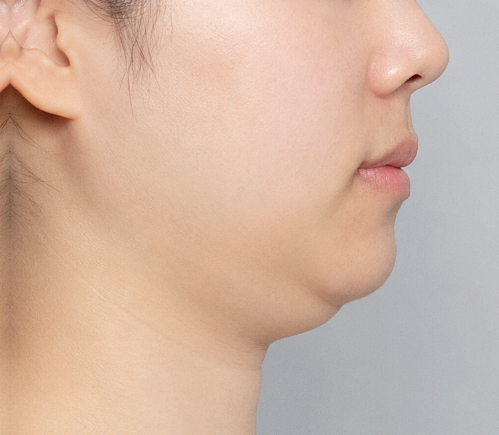
For example,
if you’re concerned about sagging across your face,
1) Ultherapy or Shurink can be used first to address the deeper support structures.
2) Then, a radiofrequency device such as Thermage or InMode can be added.
Taking your facial condition and skin density into account together may help create a synergistic effect.
On the other hand, if your main concern is fullness in the cheeks or lower face rather than your facial contours, you may consider using Onda to address the fat layer first,
then using radiofrequency lifting to improve skin elasticity.
Ultimately, even when planning the same type of lifting treatment,
What should a Hoehyeon-dong dermatology clinic assess first?
the order in which devices are combined depends on your individual needs.
This approach—planning a combination tailored to each person’s condition—is what we call 1:1 custom lifting omakase.
If you’re looking for a Hoehyeon-dong dermatology clinic that carefully assesses your skin and considers a treatment plan tailored to you, look not only for a clinic known for lifting treatments, but also for one that takes the time to explain the plan during your consultation.

If you’d like to learn more about a balanced approach to anti-aging, please see the article below.
It explains the related effects in detail based on clinical evidence,
and may help you understand the approach to lifting treatments.
Thank you. This was Lee Kang-in.
[Related article]
| Kind Global Clinic, Myeongdong Branch |
| 02-318-2888 |
This post complies with Article 56 of the Medical Service Act
and was written by
Kind Global Clinic to provide accurate medical information.
As side effects may occur
depending on the treatment and the individual,
please consult thoroughly with a medical professional
and make your decision carefully.