Pigmentation Treatment
Laser Treatment for Melasma and Dark Spots: Find the Right Approach for Your Pigmentation
Hello.
I’m Kang-in Lee, director of Kind Global Clinic, and I take the time to listen to each patient’s concerns.

It’s natural to feel concerned when you notice melasma or dark spots on your face in the mirror.
Sometimes, pigmentation that initially looks small gradually spreads over time.
“Won’t laser treatment make it fade quickly?”
Many people assume that laser treatment alone will resolve all their concerns.
However, melasma and dark spots differ in their causes and how deeply they extend into the skin, so what needs to be considered during treatment also varies.
Understanding these differences helps avoid unnecessary irritation and create a treatment plan suited to your skin.
Today, I’ll explain why it’s important to distinguish between pigmentation conditions and what approaches may help you achieve visible changes.
<What to Know About Laser Treatment for Melasma and Dark Spots>
1. Why is it important to distinguish between melasma and dark spots?
2. What treatments may be considered?
1. Why is it important to distinguish between melasma and dark spots?
Dermatology clinic near Myeongdong
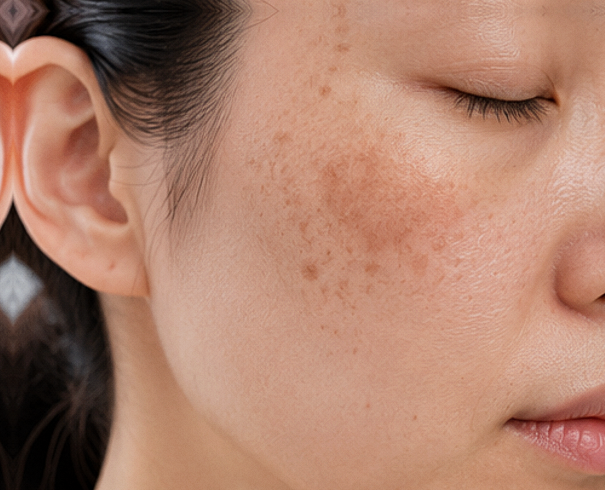
Melasma and dark spots are often brown, so it’s easy to mistake them for the same type of pigmentation.
However, in clinical practice, the two are not considered the same condition.
When considering laser treatment for melasma and dark spots, there are two important factors to distinguish:
How deeply the pigmentation is located
What causes the pigmentation
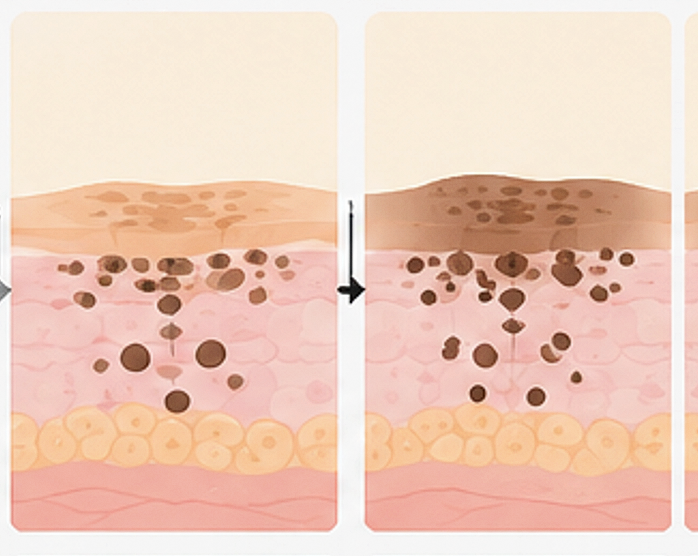
Dark spots are often caused by sun exposure and limited to areas close to the “skin’s surface.”
They tend to have relatively well-defined edges, making it easier to target the pigmented areas during treatment.
Melasma can appear differently.
It may spread over a wide area across both cheeks or the cheekbones, and melanin may extend deep into the skin.
In addition to sun exposure, various factors such as hormonal changes and skin irritation may play a role.
For this reason, it may not be appropriate to treat both types of pigmentation in the same way.
The intensity suited to dark spots may irritate melasma,
while continuing treatment focused on melasma alone may not sufficiently improve dark spots.
“I have melasma on my cheeks,
and dark spots around my eyes.”
When different types of pigmentation appear in different areas like this,
it’s especially important to carefully consider the treatment method and order.
What if the same treatment is repeated without distinguishing between the different types of pigmentation?
Melasma becoming more pronounced
Post-inflammatory hyperpigmentation (PIH)
Increased skin sensitivity
Uneven skin tone
These issues may become more likely.
That’s why it’s important to first identify the characteristics of the visible pigmentation.
This assessment also helps a dermatology clinic near Myeongdong create a treatment plan that takes your skin condition into account.
2. What treatments may be considered?
Dermatology clinic near Myeongdong
Once the characteristics of the pigmentation have been assessed,
the next step is to choose an approach suited to your skin condition.
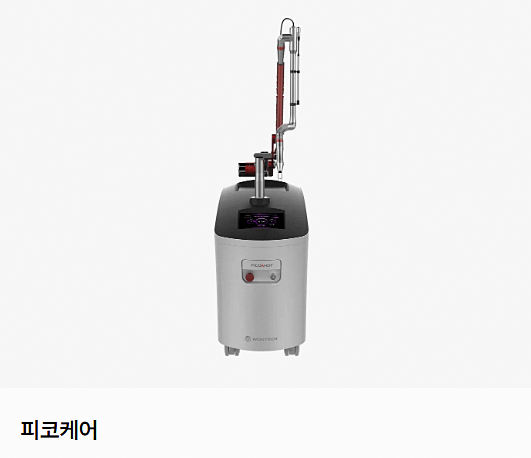
One treatment used for melasma and dark spots is “pico toning.”
Pico toning delivers laser energy over a very short period of time, measured in picoseconds.
※ Picosecond (10⁻¹² seconds): one trillionth of a second

Because the laser is delivered for such a short time,
it may reduce heat transfer to the surrounding tissue
while breaking melanin pigment into finer particles
and may help with this process.
You can think of it as breaking a large rock into smaller pieces rather than trying to break it all at once,
helping the body process the particles naturally.
Let’s look at clinical research on how this works and its effects.
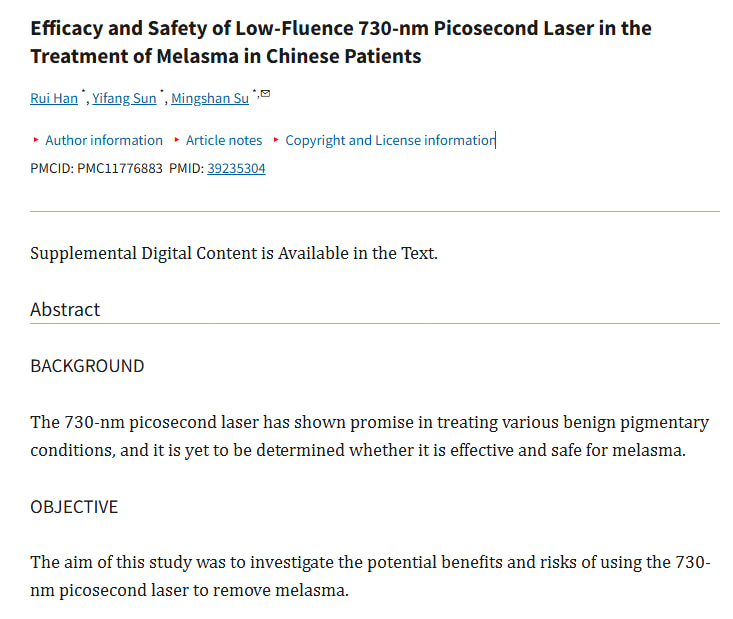
The study assessed treatment outcomes in 25 patients with melasma
using only a low-fluence 730 nm picosecond laser.
No conventional skin-lightening agents or other lasers were used,
making this a notable study because it involved “treatment with the picosecond laser alone.”
Participants received an average of 3.56 treatments, and their progress was monitored for approximately 8.5 weeks.
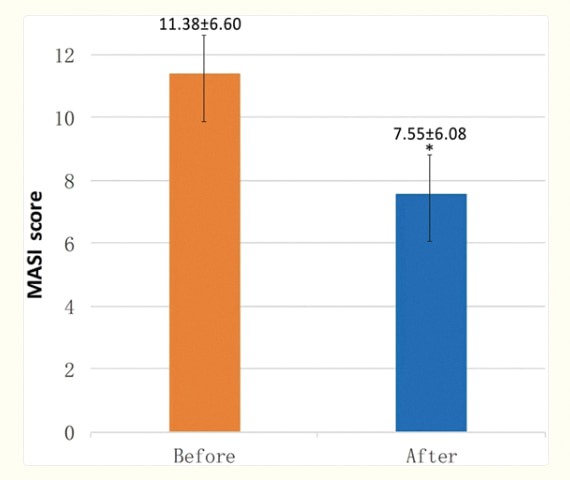
The MASI (Melasma Area and Severity Index) score, which assesses the extent and severity of melasma,
“decreased from an average of 11.38 to 7.55 points,”
a reported reduction of approximately 33.7%.
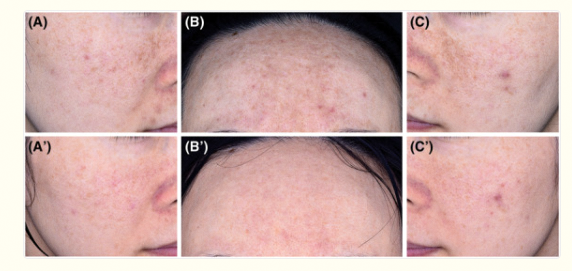
The study also reported on safety.
Temporary redness immediately after treatment generally improved within 24 hours,
and concerning side effects such as
post-inflammatory hyperpigmentation (PIH),
hypopigmentation, scarring, or other serious adverse effects
were not observed.
However, this was a retrospective study involving 25 people, which is a limitation,
and the findings do not mean that everyone will have the same results.
Still, it is worth noting that the study provides clinical evidence for an approach that considers both effectiveness and safety in melasma treatment.
If you’re concerned about melasma or dark spots, first assess the type and depth of the pigmentation,
then consider pico toning
as part of a laser treatment plan for melasma and dark spots
that may be appropriate for you.
Today, we looked at why it’s important to distinguish between melasma and dark spots, as well as how pico toning works.
First, identify what types of pigmentation are present in your skin,
then choose a treatment approach based on their characteristics to help achieve changes suited to your skin condition.
If you’re wondering which treatment to choose at a dermatology clinic near Myeongdong,
I hope today’s information on laser treatment for melasma and dark spots helps you consider your options.
Thank you. This has been Kang-in Lee.
[Related articles you may find helpful]
| Kind Global Clinic Myeongdong Branch |
| 02-318-2888 |
This article was written by Kind Global Clinic
to provide accurate medical information
in compliance with Article 56 of the Medical Service Act.
All procedures may cause side effects
depending on the individual,
so please consult thoroughly with a medical professional
before making a careful decision.